
Om Shreem Mahavishnave Namaha
Explore Om Shreem Mahavishnave Namaha mantra's deep meaning, benefits for wealth, protection, and spiritual growth. A powerful invocation of Lord Vishnu and Lakshmi.
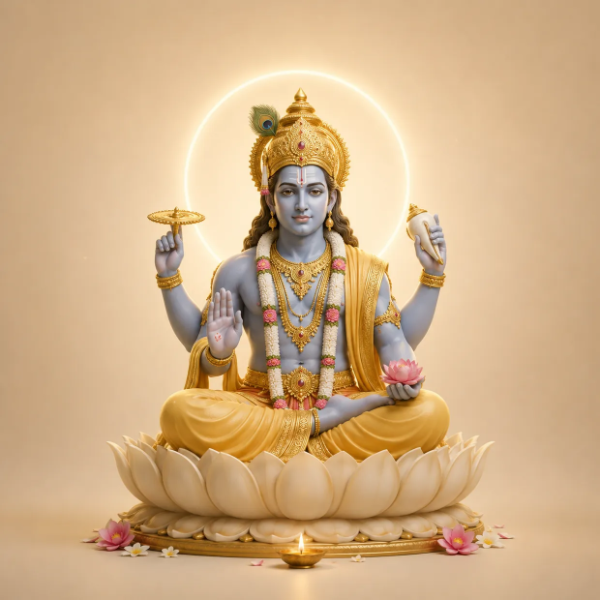
Meaning of Mantra
This powerful mantra, "Om Shreem Mahavishnave Namaha," translates to "I offer my salutations to the Great Lord Vishnu, who is the embodiment of the primordial sound Om and the source of all auspiciousness, prosperity, and divine abundance, represented by the sacred sound Shreem." It is a profound invocation seeking the combined blessings of Lord Vishnu, the supreme preserver and sustainer of the cosmos, and Goddess Lakshmi, his divine consort and bestower of all forms of wealth and auspiciousness. The mantra acknowledges Vishnu's supreme pervasive nature and his role in maintaining cosmic order, while integrating the energy of divine abundance for holistic well-being.
Benefits & Science
Benefits of Chanting:
Chanting "Om Shreem Mahavishnave Namaha" regularly can create a profound energetic shift, inviting abundance in its multifaceted forms – not just financial wealth, but also good health, fulfilling relationships, and opportunities for growth. The 'Shreem' beej mantra is particularly potent for attracting auspiciousness and material prosperity, while the invocation of Mahavishnu provides robust spiritual and physical protection, ensuring sustenance and stability. This mantra gently helps in dissolving mental blocks, negative thought patterns, and limiting beliefs that may hinder one's progress. Regular practice fosters a calm, positive, and focused mindset, enhancing decision-making abilities and strengthening one's spiritual connection. This alignment with divine energy promotes overall well-being and helps navigate life's challenges with grace, leading to a more purposeful and spiritually enriched existence.
Scientific Perspective:
The practice of chanting "Om Shreem Mahavishnave Namaha" engages the vocal cords and respiratory system in a rhythmic, controlled manner, producing specific sound vibrations. The primordial sound 'Om' is scientifically linked to stimulating the vagus nerve, which influences the parasympathetic nervous system, promoting relaxation, reducing stress, and potentially improving heart rate variability and digestion. The resonance generated by 'Shreem' and other sounds is believed to create subtle energetic shifts in the body and brain, potentially impacting neural pathways and brainwave activity. Regular, meditative chanting can lead to an increase in alpha and theta brainwaves, associated with deep relaxation, enhanced creativity, improved focus, and heightened intuition. This bio-neurological effect supports mental clarity, emotional balance, and a reduced stress response, creating an optimal state for cognitive function and well-being.
Mythology & Origin
Mantra Origin Saga:
This mantra's components draw from ancient Vedic wisdom and later Puranic traditions. The 'Om' is eternal, representing the cosmic sound of creation. 'Shreem' is a potent Beej (seed) mantra whose origins are rooted in Tantric and Shaktism traditions, specifically associated with Goddess Lakshmi. The invocation of 'Mahavishnu' comes from the Vaishnava Puranas. The mantra itself is a synthesis, not bound to a singular origin story, but rather a powerful evolution of devotional practice combining the supreme preserver with his inherent energy of auspiciousness and prosperity, deeply embedded in Hindu dharma from antiquity.
Scriptures Mentions:
The glorification of Lord Vishnu and Goddess Lakshmi, and the power of their divine names and mantras, are extensively detailed across various Hindu scriptures. Prominent mentions are found in the Vaishnava Puranas such as the Vishnu Purana, Srimad Bhagavatam, Padma Purana, and Skanda Purana. The significance of 'Shreem' as a prosperity and abundance mantra is also elaborated in Tantric texts and various mantra shastras. These texts often describe the interconnectedness of Vishnu and Lakshmi, and how their combined invocation brings holistic well-being.
Associated Rishi & Deity:
The primary deity associated with this mantra is Lord Mahavishnu, the Great Preserver, who along with his consort Goddess Lakshmi (whose energy is invoked by 'Shreem'), represents the cosmic forces of sustenance, order, and abundance. While no single Rishi is exclusively attributed to the 'creation' of this particular composite mantra, countless ancient Rishis and sages like Narada, Bhrigu, Markandeya, and Vashistha have revered Vishnu and Lakshmi through numerous hymns and chants, thereby establishing the profound spiritual lineage and power of such invocations.
Historical Significance:
The chanting of Vishnu mantras and the veneration of Goddess Lakshmi have been cornerstones of Hindu devotional practices for millennia, symbolizing the enduring human quest for both material sustenance and spiritual liberation. This mantra specifically represents the seamless integration of Vaishnavism (devotion to Vishnu) and Shaktism (devotion to the divine feminine creative energy, Lakshmi), underscoring the ancient Hindu understanding of Purusha (consciousness) and Prakriti (nature/energy) as fundamentally inseparable. Historically, such mantras were widely employed by householders seeking prosperity and protection, as well as by ascetics striving for higher spiritual realization, thus deeply embedding them into the cultural, social, and religious fabric of India.
Frequently Asked Questions (FAQs)
Who is Lord Mahavishnu and what is his role?
What is the specific significance of the 'Shreem' beej mantra?
Can this mantra be chanted by anyone, regardless of religious background?
How often and for how long should one chant this mantra?
Is this mantra solely for financial gain, or does it offer other benefits?
What is the role of 'Om' at the beginning of the mantra?
Can this mantra help in overcoming life's challenges and obstacles?
What is the proper way to sit or posture for chanting?
Mantra Sadhana Guidelines
Best Time to Chant
- Mondays are especially auspicious and beneficial.
- Early morning Brahma Muhurta (4:00 - 6:00 AM) is best.
- Highly fruitful during Pradosh Kaal and Mahashivratri.
- Chant before commencing any auspicious task or ritual.
Other Popular Lord Vishnu Mantras
Other Devotional Categories


Download App
पंचांग तिथि, त्यौहार, व्रत, उत्सव, एकादशी, आरती संग्रह, मंत्र, व्रत कथा