
Om Vamanaya Namah
Explore the profound Om Vamanaya Namah mantra, invoking Lord Vamana. Discover its spiritual meaning, benefits for humility, obstacle removal, and a comprehensive chanting guide.
Meaning of Mantra
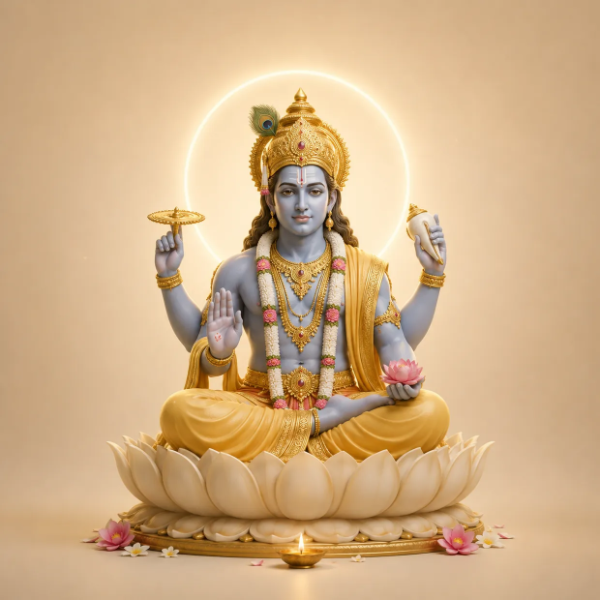
“I offer my humble salutations to Lord Vamana, the divine dwarf incarnation of Vishnu.” This mantra invokes the energy of Lord Vamana, seeking his blessings for overcoming challenges, cultivating humility, and attaining spiritual elevation. It's a surrender to the divine power that can manifest in unexpected forms to restore cosmic balance and dharma.
Benefits & Science
Benefits of Chanting:
Chanting "Om Vamanaya Namah" is believed to foster deep spiritual benefits. Regularly engaging with this mantra can help in cultivating profound humility, a foundational virtue for spiritual progress, as one recognizes the vastness of the divine and the relative smallness of the ego. It is also associated with the removal of various obstacles (भौतिक और आध्यात्मिक) from one's path, as Lord Vamana's cosmic steps overcame even the most formidable challenges. Devotees often experience a sense of divine protection and an expansion of consciousness, leading to greater wisdom and inner peace. By aligning with the energy of Vamana, one may attract an unexpected flow of positive resources and abundance, not necessarily material, but also in terms of opportunities, knowledge, and spiritual insights, contributing to overall holistic well-being.
Scientific Perspective:
The rhythmic chanting of "Om Vamanaya Namah" generates specific sound vibrations that can positively impact the human mind and body. The "Om" sound, a primordial resonance, is known to stimulate the vagus nerve, which plays a crucial role in regulating heart rate, digestion, and mood, leading to a calm and relaxed state (parasympathetic activation). The repetitive vocalization and focused attention during chanting can synchronize brainwave patterns, potentially increasing alpha and theta waves associated with relaxation, meditation, and enhanced creativity. This vibrational therapy, when practiced consistently, can reduce stress hormones, improve concentration, and promote neuroplasticity, fostering a sense of well-being and mental clarity. The specific intonation for "Vamanaya Namah" further contributes to these resonant effects, aiding in mental discipline and emotional balance.
Mythology & Origin
Mantra Origin Saga:
Lord Vamana is the fifth incarnation (Avatar) of Vishnu, appearing in the Treta Yuga. His incarnation was primarily to humble the extremely powerful and benevolent King Bali, who, through his rigorous penance and generosity, had gained dominion over the three worlds, challenging the sovereignty of the Devas. Vishnu incarnated as a diminutive Brahmin dwarf (Vamana) to trick Bali into surrendering his vast power and possessions, thereby restoring cosmic order and dharma.
Scriptures Mentions:
The primary account of Lord Vamana's incarnation is found in the Bhagavata Purana (Skandha 8), Vishnu Purana, and also referenced in other Puranas like the Agni Purana and Garuda Purana. These scriptures detail his birth from Aditi and Kashyapa, his visit to King Bali's Yajna, his request for three paces of land, and his subsequent cosmic expansion to reclaim the universe.
Associated Rishi & Deity:
The primary deity associated is Lord Vishnu, specifically in his Vamana avatar. Sage Kashyapa and his wife Aditi are Vamana's parents. Shukracharya, King Bali's guru, is also a key figure in the narrative, having tried to warn Bali about Vamana's true divine nature.
Historical Significance:
The Vamana avatar signifies the triumph of dharma over adharma, even when the latter is practiced by a virtuous king like Bali. It underscores that spiritual order and universal balance are paramount, and even acts of extreme generosity can be misguided if they disrupt cosmic harmony. Historically, the narrative has served as a moral compass, teaching humility, the importance of divine grace, and the understanding that true power is spiritual, not material. It's a testament to Vishnu's role as the preserver of the universe, demonstrating his willingness to intervene personally to maintain cosmic equilibrium and protect the righteous.
Frequently Asked Questions (FAQs)
Who is Lord Vamana and what is his significance?
What is the primary spiritual significance of chanting "Om Vamanaya Namah"?
Can anyone chant this mantra, or are there specific requirements?
What are the recommended times and directions for chanting this mantra?
How does this mantra assist in overcoming life's obstacles?
Does chanting "Om Vamanaya Namah" offer material benefits, or is it purely spiritual?
What is the philosophical significance of Vamana's 'dwarf' form?
How does consistent chanting impact one's ego and mental state?
Mantra Sadhana Guidelines
Best Time to Chant
- Mondays are especially auspicious and beneficial.
- Early morning Brahma Muhurta (4:00 - 6:00 AM) is best.
- Highly fruitful during Pradosh Kaal and Mahashivratri.
- Chant before commencing any auspicious task or ritual.
Other Popular Lord Vishnu Mantras
Other Devotional Categories


Download App
पंचांग तिथि, त्यौहार, व्रत, उत्सव, एकादशी, आरती संग्रह, मंत्र, व्रत कथा