
Shuklambaradharam Vishnum Mantra: Obstacle Removal Prayer
Explore the profound Shuklambaradharam Vishnum Mantra, a powerful Dhyana Shloka for obstacle removal, mental clarity, and spiritual peace. Learn its meaning, benefits, and chanting guide.
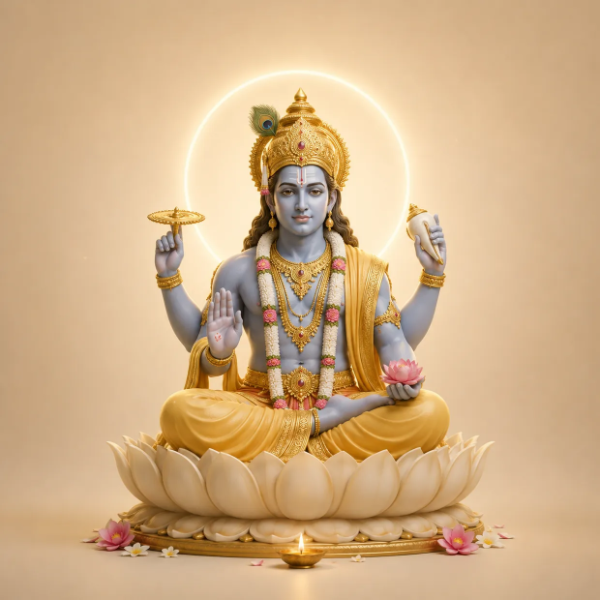
Meaning of Mantra
Meditate upon Lord Vishnu, who is adorned in white garments, possesses a complexion radiant like the moon, has four auspicious arms, and bears a serene and benevolent countenance, for the complete eradication and pacification of all obstacles.
Benefits & Science
Benefits of Chanting:
Chanting the Shuklambaradharam Vishnu Mantra cultivates a profound state of inner tranquility and mental clarity, which naturally assists in dissolving impediments. The focused recitation helps in calming the mind, reducing stress, and fostering a positive mental attitude, making one more resilient to challenges. This practice is believed to invoke the protective energies of Lord Vishnu, creating a spiritual shield that safeguards against negative influences and promotes a harmonious environment. Regular meditation on this mantra can enhance one's focus and concentration, leading to improved decision-making and problem-solving abilities. Spiritually, it aids in purifying the mind, aligning the individual with higher consciousness, and attracting divine grace, thereby paving the way for spiritual growth and success in various endeavors. It’s about building an inner fortitude that transforms obstacles into stepping stones.
Scientific Perspective:
From a scientific viewpoint, chanting mantras involves rhythmic vocalization and repetition, which can induce a meditative state. This process often leads to a shift in brainwave patterns, moving from beta (active, alert) to alpha (relaxed, calm) and even theta (deep relaxation, creativity). The controlled breathing and focused attention inherent in mantra chanting stimulate the vagus nerve, which is central to the parasympathetic nervous system. Activation of the vagus nerve promotes a 'rest and digest' response, lowering heart rate, blood pressure, and reducing stress hormones like cortisol. The specific vibrational frequencies of Sanskrit syllables are also posited to resonate with various energy centers (chakras) in the body, potentially harmonizing physiological processes and enhancing overall well-being. This creates a neural pathway for resilience, emotional regulation, and improved cognitive function, effectively helping the brain perceive and process challenges more calmly and constructively.
Mythology & Origin
Mantra Origin Saga:
While not having a specific origin story like some Puranic tales, this Dhyana Shloka is part of the traditional prayers offered to Lord Vishnu, typically recited before commencing any significant task, ceremony, or prayer. It sets the mind in a state of purity and devotion, invoking Vishnu's blessings for an obstacle-free undertaking. It's often chanted at the beginning of any Vedic ritual (Yajna, Puja) or personal sadhana to ensure its successful completion.
Scriptures Mentions:
This mantra is a classic Dhyana Shloka found in various Puranas, Tantric texts, and liturgical manuals (Paddhatis) associated with Vaishnava traditions. It is frequently included in the preliminary sections of Hindu pujas and ceremonies, particularly those dedicated to Vishnu or general auspicious beginnings, emphasizing its widespread acceptance and use in Sanatana Dharma.
Associated Rishi & Deity:
Lord Vishnu is the primary deity invoked. While no specific Rishi is traditionally attributed as the seer (Drashta) of this particular Dhyana Shloka in the same way as for a Vedic Sukta, it belongs to the collective wisdom of ancient Vedic seers and devotional traditions that formulated prayers for auspicious beginnings and protection.
Historical Significance:
Historically, the practice of beginning any significant endeavor with an invocation to a deity for obstacle removal is deeply ingrained in Hindu culture. This mantra serves as a foundational and universal prayer, signifying the importance of seeking divine assistance and maintaining mental purity before embarking on any path. Its ubiquitous presence in Hindu rituals underscores its role in shaping spiritual discipline and the cultural ethos of seeking harmony and success through divine grace. It reflects a timeless tradition of preparing the mind and environment for sacred work.
Frequently Asked Questions (FAQs)
Who is Lord Vishnu in Hinduism?
Is this mantra only for Vishnu devotees?
Can this mantra help with specific problems?
What is the significance of "white garments" and "moon-like complexion"?
Is there any specific mudra or hand gesture to use while chanting?
How often should I chant this mantra?
Can children chant this mantra?
What if I don't understand Sanskrit pronunciation perfectly?
Mantra Sadhana Guidelines
Best Time to Chant
- Mondays are especially auspicious and beneficial.
- Early morning Brahma Muhurta (4:00 - 6:00 AM) is best.
- Highly fruitful during Pradosh Kaal and Mahashivratri.
- Chant before commencing any auspicious task or ritual.
Other Popular Lord Vishnu Mantras
Other Devotional Categories


Download App
पंचांग तिथि, त्यौहार, व्रत, उत्सव, एकादशी, आरती संग्रह, मंत्र, व्रत कथा