
Vasudeva Sutam Krishna Mantra
Discover the profound Vasudeva Sutam Krishna Mantra. Learn its deep spiritual meaning, powerful benefits for peace & wisdom, correct pronunciation, and chanting rules.
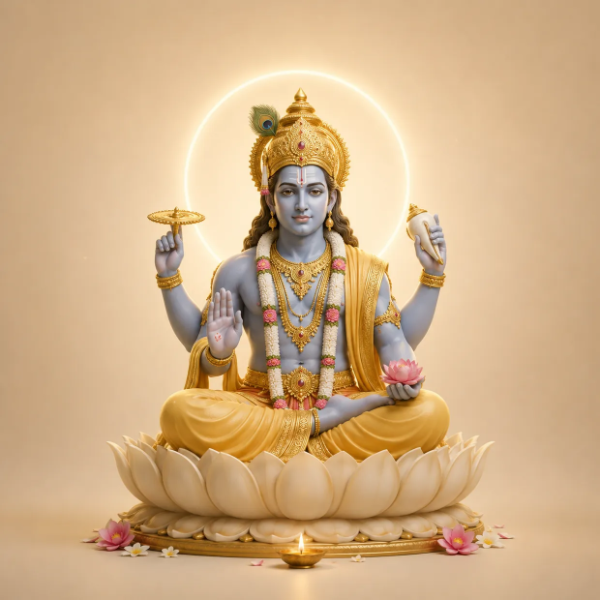
Meaning of Mantra
I bow down to Lord Krishna, the son of Vasudeva, the divine one, who slayed Kamsa and Chanura, who is the supreme joy of Devaki, and who is the spiritual preceptor of the entire universe.
Benefits & Science
Benefits of Chanting:
Chanting this mantra regularly helps devotees connect deeply with Lord Krishna, fostering immense love and devotion. It is believed to alleviate suffering, remove obstacles, and grant inner peace. By meditating on Krishna as the Jagadguru, one gains clarity, wisdom, and divine guidance in life's journey, leading to spiritual growth and emotional stability.
Scientific Perspective:
While the benefits of mantras are primarily spiritual, the act of rhythmic chanting involves vocalization and focused attention, which can induce a meditative state. This state is known to reduce stress, improve concentration, and promote a sense of well-being by calming the nervous system and positively altering brain wave patterns, similar to other forms of mindfulness practices.
Mythology & Origin
Mantra Origin Saga:
This mantra is a traditional devotional prayer dedicated to Lord Krishna, specifically identifying him by his parentage (son of Vasudeva and Devaki) and his heroic deeds (slayer of Kamsa and Chanura). It highlights his role as the divine teacher, the Jagadguru, signifying the universal reverence for his wisdom and teachings.
Scriptures Mentions:
Primarily found in devotional literature (bhajans, stotras) inspired by the Puranas, especially the Bhagavata Purana (Srimad Bhagavatam) which details Krishna's life and deeds, including his birth, childhood, and the slaying of demons like Kamsa and Chanura.
Associated Rishi & Deity:
Lord Krishna himself, Vasudeva, Devaki, Kamsa, Chanura. The mantra expresses profound devotion from the perspective of a devotee recognizing Krishna's divine attributes as a protector, a source of joy, and a universal teacher.
Historical Significance:
This mantra holds immense significance in Vaishnavism and among devotees of Krishna worldwide. It encapsulates the core identity and primary attributes of Krishna, making it a foundational prayer for daily devotion and an expression of unwavering faith, used across generations to invoke his presence and blessings.
Frequently Asked Questions (FAQs)
Who is Lord Krishna mentioned in this mantra?
Is this mantra only for Krishna devotees?
What is the significance of 'Jagadgurum'?
Can I chant this mantra silently?
Do I need a guru to chant this mantra?
What does 'Kansachanooramardanam' imply?
Is there a specific time of day for chanting?
Can children chant this mantra?
Mantra Sadhana Guidelines
Best Time to Chant
- Mondays are especially auspicious and beneficial.
- Early morning Brahma Muhurta (4:00 - 6:00 AM) is best.
- Highly fruitful during Pradosh Kaal and Mahashivratri.
- Chant before commencing any auspicious task or ritual.
Other Popular Lord Vishnu Mantras
Other Devotional Categories


Download App
पंचांग तिथि, त्यौहार, व्रत, उत्सव, एकादशी, आरती संग्रह, मंत्र, व्रत कथा