
Ardha-kāyam Mahā-vīryam Rahu Mantra
Explore the profound Ardha-kāyam Rahu Mantra to alleviate Rahu Dosha, gain clarity, and foster spiritual growth. Detailed meaning, benefits & chanting rules.
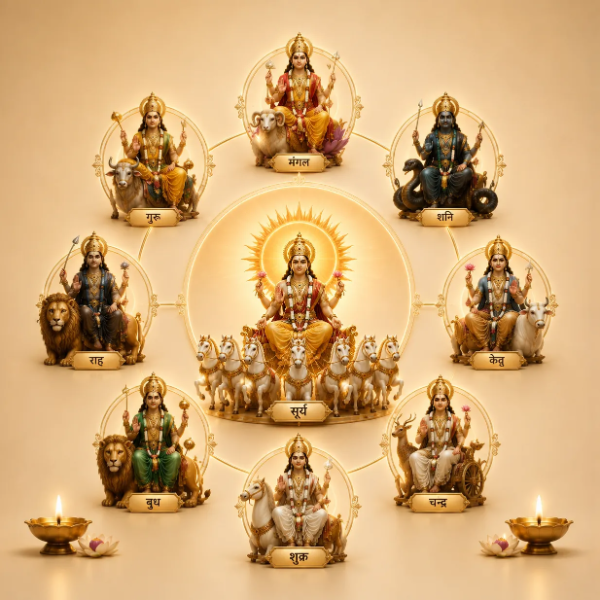
Meaning of Mantra
I offer my obeisance to Rahu, who has a half-body, is immensely powerful, and is the one who afflicts (causes eclipses for) the Moon and the Sun, being born from the womb of Simhika.
Benefits & Science
Benefits of Chanting:
Chanting the Rahu mantra is believed to bring about a profound shift in one's energetic field. It helps in neutralizing the adverse effects (Rahu Dosha) associated with a malefic Rahu placement in one's astrological chart, leading to a sense of protection from unseen negative influences and black magic. Regular recitation fosters mental clarity, aiding in better decision-making and reducing confusion. It is said to mitigate sudden obstacles, delays, and misfortunes that Rahu often symbolizes. The practice can enhance intuitive faculties, guiding individuals through complex situations. Spiritually, it supports growth by helping devotees understand and overcome their karmic patterns and worldly illusions. From a psychological standpoint, the rhythmic chanting can reduce anxiety and stress, promoting a calm and focused mind, which naturally improves concentration.
Scientific Perspective:
The rhythmic chanting of mantras generates specific sound vibrations that can influence brainwave patterns. These vibrations, particularly when uttered with focus and intent, are thought to stimulate the vagus nerve, which plays a crucial role in regulating heart rate, digestion, and mood. Activation of the vagus nerve can promote a parasympathetic nervous system response, inducing a state of calm and reducing stress. The repetitive nature of chanting can also lead to a meditative state, characterized by alpha or theta brainwaves, associated with deep relaxation, increased creativity, and enhanced self-awareness. The phonetic structure of Sanskrit, being a highly organized language, is believed to create resonant frequencies that can positively impact the cellular and energetic systems of the body, fostering a sense of balance and well-being.
Mythology & Origin
Mantra Origin Saga:
The legend of Rahu's birth is recounted in the Samudra Manthan (Churning of the Ocean) episode from Hindu mythology. During the distribution of Amrita (nectar of immortality) to the Devas by Mohini (Vishnu's female avatar), a Danava (demon) named Svarbhanu disguised himself among the Devas to partake of the Amrita. The Sun and Moon deities recognized him and alerted Mohini. Before the nectar could fully descend his throat, Vishnu severed his head with his discus, Sudarshana Chakra. The part that had consumed the Amrita became immortal. The head became Rahu, and the body became Ketu. Enraged by the betrayal, Rahu eternally pursues the Sun and Moon, swallowing them periodically to cause eclipses, only for them to emerge again due to his headless state.
Scriptures Mentions:
This episode is prominently featured in various Puranas, including the Bhagavata Purana, Vishnu Purana, and Devi Bhagavata Purana. The Brihat Parashara Hora Shastra, a foundational text of Vedic astrology, also details Rahu's characteristics and astrological significance. Mantras dedicated to Rahu are found in various Tantric and Vedic traditions.
Associated Rishi & Deity:
Associated with Lord Vishnu (who cut off his head) and the Navagrahas (nine planetary deities). His mother is Simhika.
Historical Significance:
Rahu, along with Ketu, holds immense significance in Vedic astrology as 'Chhaya Grahas' (shadow planets). They are not physical celestial bodies but are mathematical points representing the intersection of the Sun and Moon's paths (the lunar nodes). Historically, these points have been recognized by ancient civilizations for their influence on eclipses and terrestrial events. In Hindu culture, Rahu's influence is often associated with worldly desires, sudden gains or losses, unconventional paths, illusions, and karmic lessons. Appeasing Rahu through mantras and rituals has been a long-standing practice to mitigate perceived negative influences and harness positive energies.
Frequently Asked Questions (FAQs)
Who is Rahu in Hindu mythology?
Why is the Rahu mantra chanted?
What are the common effects of a strong Rahu in a birth chart?
Can women chant this Rahu mantra?
How often should one chant this mantra?
Is it necessary to face a specific direction while chanting?
What is the significance of "half-bodied" for Rahu?
Can this mantra help with career growth?
Mantra Sadhana Guidelines
Best Time to Chant
- Mondays are especially auspicious and beneficial.
- Early morning Brahma Muhurta (4:00 - 6:00 AM) is best.
- Highly fruitful during Pradosh Kaal and Mahashivratri.
- Chant before commencing any auspicious task or ritual.
Other Popular Navgrah Mantras
Other Devotional Categories

Download App
पंचांग तिथि, त्यौहार, व्रत, उत्सव, एकादशी, आरती संग्रह, मंत्र, व्रत कथा