
Adityaya Cha Somaya Mangalaya Budhaya Cha. Guru Shukra Shanibhyashcha Rahave Ketave Namaha.
Explore the powerful Navagraha Mantra for cosmic balance, astrological well-being, and mitigating planetary influences. Deep dive into its meaning, benefits, and ancient wisdom.
Meaning of Mantra
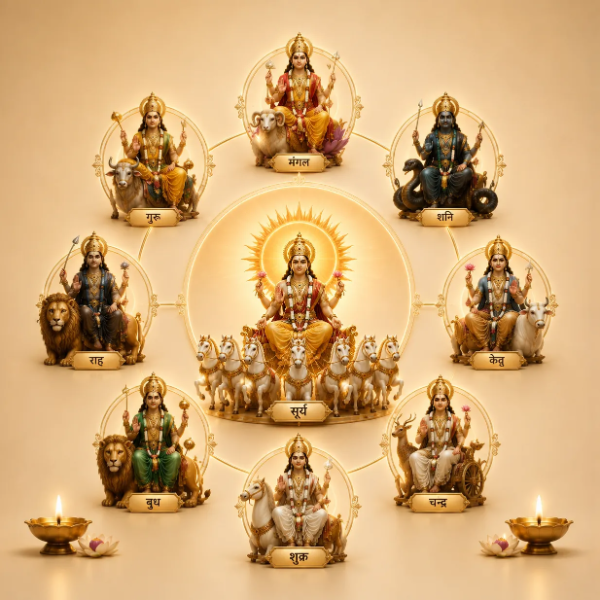
This powerful Navagraha Mantra is a humble salutation to the nine celestial bodies or deities that hold immense significance in Vedic astrology and cosmic influence. It translates to: 'Salutations to the Sun (Aditya), and to the Moon (Soma), to Mars (Mangala), and to Mercury (Budha); and to Jupiter (Guru), Venus (Shukra), and Saturn (Shani), and to Rahu and Ketu, I offer my reverence.' It is an invocation seeking harmony and balance from these powerful cosmic forces that are believed to govern various aspects of human life and destiny.
Benefits & Science
Benefits of Chanting:
Regular recitation of the Navagraha Mantra is believed to create a powerful energetic shield, harmonizing the planetary influences in one's birth chart. While not guaranteeing instant shifts in fate, consistent chanting can subtly realign an individual's energetic field, helping to mitigate the intensity of challenging planetary periods (dashas or transits) and amplify the benevolent ones. This practice is understood to foster astrological stability, reduce mental and emotional distress, and promote a sense of balance. The vibrational resonance can enhance mental clarity, improve focus, and cultivate an inner strength to navigate life's challenges more effectively. Over time, practitioners often report a greater sense of peace, improved health, and a more positive outlook, leading to enhanced overall well-being and a gentle unfolding of favorable circumstances aligned with one's higher purpose.
Scientific Perspective:
From a scientific lens, mantra chanting, including the Navagraha Mantra, can be understood as a form of focused sound vibration and mindfulness. The repetitive rhythmic vocalization stimulates the vagus nerve, which plays a crucial role in regulating heart rate, digestion, and the body's stress response. This stimulation can activate the parasympathetic nervous system, leading to a 'rest and digest' state, reducing cortisol levels, and promoting relaxation. The coherent vibrations and sustained attention required for chanting can induce alpha or theta brainwave states, similar to those experienced during deep meditation, enhancing neuroplasticity and fostering mental calmness and clarity. This practice can improve concentration, emotional regulation, and may contribute to a stronger sense of psychological well-being by creating a coherent internal environment, irrespective of external astrological influences.
Mythology & Origin
Mantra Origin Saga:
The concept of Navagrahas originates from the ancient Vedic tradition, deeply integrated into Jyotish Shastra (Vedic Astrology). These nine celestial entities are not merely astronomical bodies but are deified as powerful beings who influence the destiny and life events of individuals based on their positions at the time of birth and subsequent transits. Their worship became a fundamental aspect of Hindu spiritual practice to appease and seek blessings from these cosmic regulators.
Scriptures Mentions:
The Navagrahas are extensively mentioned and elaborated upon in various Puranas such as the Brihat Parashara Hora Shastra, Agni Purana, Matsya Purana, Garuda Purana, and Skanda Purana. While not explicitly detailed in the early Vedas, the underlying principles of cosmic influence and deified celestial bodies are foundational to Vedic cosmology, leading to their systematic description in later astrological and puranic texts.
Associated Rishi & Deity:
The Navagrahas themselves are the primary deities associated with this mantra: Surya (Sun), Chandra (Moon), Mangala (Mars), Budha (Mercury), Guru (Jupiter), Shukra (Venus), Shani (Saturn), Rahu (North Lunar Node), and Ketu (South Lunar Node). Sage Parashara is considered one of the foremost proponents and systematizers of Vedic astrology, whose teachings extensively detail the influence and remedies related to these planetary deities.
Historical Significance:
Historically, the Navagraha system has been an integral part of Hindu culture and daily life for millennia. Navagraha temples and altars are common across India, where individuals offer prayers and perform rituals to mitigate adverse planetary effects and enhance favorable ones. The mantra's significance extends to major life events, astrological consultations, and remedial measures, shaping personal and communal decisions based on cosmic timing and influences. Its practice continues to be a cornerstone of spiritual resilience and harmony in contemporary times.
Frequently Asked Questions (FAQs)
What are the Navagrahas and why are they important?
How does chanting this mantra help with planetary influences?
Who can chant the Navagraha Mantra?
Do I need an astrologer's advice before chanting this mantra?
How long does it take to see results from chanting?
What is the significance of the word 'Cha' in the mantra?
Is it okay to chant the mantra mentally?
Can this mantra negate all bad karma?
Mantra Sadhana Guidelines
Best Time to Chant
- Mondays are especially auspicious and beneficial.
- Early morning Brahma Muhurta (4:00 - 6:00 AM) is best.
- Highly fruitful during Pradosh Kaal and Mahashivratri.
- Chant before commencing any auspicious task or ritual.
Other Popular Navgrah Mantras
Other Devotional Categories


Download App
पंचांग तिथि, त्यौहार, व्रत, उत्सव, एकादशी, आरती संग्रह, मंत्र, व्रत कथा