
Chandra Dev Stuti Mantra
Unlock mental peace, emotional balance & spiritual purity with the potent Chandra Dev Stuti Mantra. Explore its deep meaning, benefits, and mythological roots.
Meaning of Mantra
This beautiful Sanskrit shloka is a profound salutation to Chandra Deva, the Moon God, who is also known as Soma. It describes his radiant and pristine form, likening his brilliance to the pure white hues of curd, a conch shell, and fresh snow. It acknowledges his divine origin, stating that he was born from the cosmic Ocean of Milk (Kshirasagara) during the legendary Samudra Manthan. The mantra culminates in a heartfelt obeisance, 'I bow down to Shashin (the Moon) and Soma, who is the sublime ornament adorning the crown of Lord Shambhu (Shiva).' This shloka encapsulates reverence for the Moon's cooling, calming, and life-sustaining energies, recognizing its vital role in the cosmos and its intimate connection with Lord Shiva.
Benefits & Science
Benefits of Chanting:
Regular chanting of the Chandra Dev Stuti Mantra is believed to cultivate a profound sense of mental peace and emotional stability. By invoking the calming energies of the Moon, practitioners may experience a reduction in anxiety and stress, fostering inner serenity and clarity of thought. It is often recited to mitigate the adverse effects attributed to an unfavorably placed Moon in one's astrological chart (Chandra Dosha), thereby promoting overall well-being and harmony in relationships. The mantra's resonance with the cooling nature of the Moon can also help to soothe agitated minds and enhance intuitive faculties. Furthermore, by aligning with the nurturing and creative aspects associated with Chandra, individuals might find an increase in compassion, artistic expression, and a deeper connection to their subconscious wisdom, leading to more restful sleep and a balanced temperament.
Scientific Perspective:
From a psycho-acoustic standpoint, the rhythmic recitation of mantras, like the Chandra Dev Stuti, generates specific sound vibrations that can influence brainwave patterns. Chanting often induces states associated with alpha and theta brainwaves, correlating with deep relaxation, meditation, and enhanced receptivity. The repetitive vocalization and focused attention can stimulate the vagus nerve, which plays a crucial role in regulating the body's parasympathetic nervous system – responsible for 'rest and digest' functions. This activation can lower heart rate, reduce muscle tension, and promote a sense of calm. The Sanskrit phonetics are designed to resonate within the human body, potentially creating subtle internal massages and harmonizing energetic centers, thus contributing to physiological and psychological well-being. The systematic engagement of auditory, vocal, and cognitive faculties creates a focused state that can aid in emotional regulation and stress reduction, akin to mindfulness practices.
Mythology & Origin
Mantra Origin Saga:
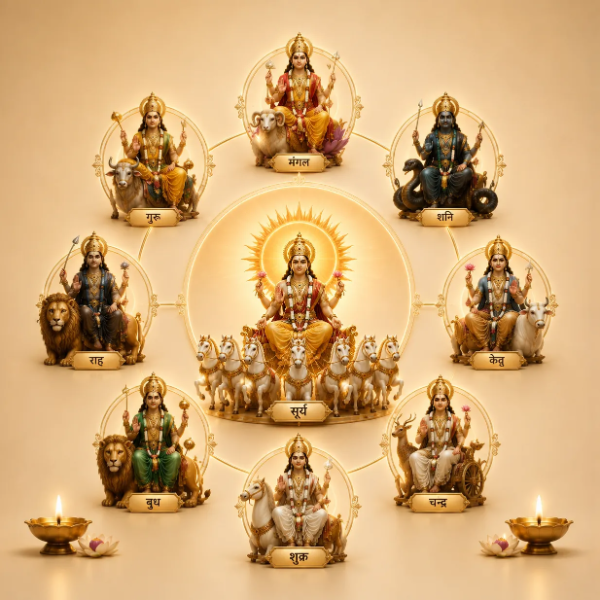
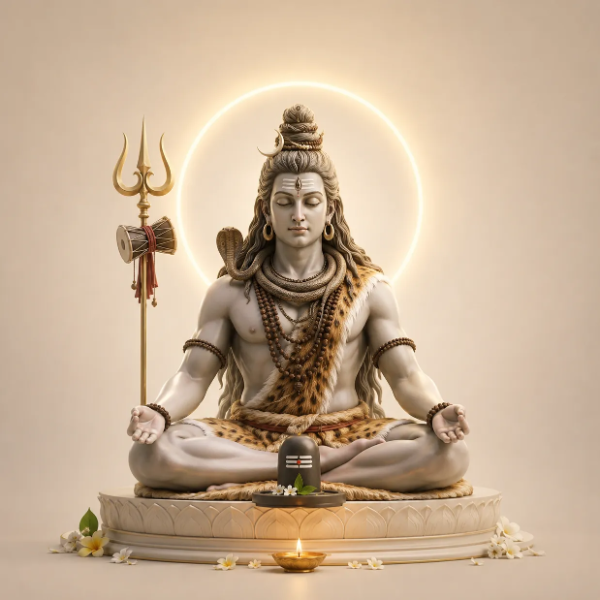
The Moon (Chandra or Soma) is one of the Navagrahas (nine celestial bodies) in Hindu cosmology. His most famous origin story is from the Samudra Manthan (Churning of the Ocean of Milk). During this epic event, many divine beings and objects emerged from the ocean, and Chandra was one of them. He appeared with a radiant, cooling glow, and Lord Shiva, to contain the powerful energies emerging from the Manthan, placed Chandra on his forehead, making him a permanent ornament of his crown. This act signifies Shiva's mastery over the mind and emotions, as Chandra governs these aspects.
Scriptures Mentions:
References to Chandra and Soma are abundant in various Hindu scriptures. The Rig Veda contains numerous hymns dedicated to Soma, often associated with a divine elixir and also personified as the Moon. Puranas like the Vishnu Purana, Bhagavata Purana, and Devi Bhagavata Purana elaborate on the Samudra Manthan and Chandra's emergence. Jyotish Shastra (Vedic Astrology) texts extensively discuss the Moon's influence as a planetary deity on human destiny, mind, and emotions.
Associated Rishi & Deity:
The primary deity associated is Chandra Deva (the Moon God) himself, and Lord Shiva, whose crown he adorns. Chandra is often depicted holding a lotus and riding a chariot drawn by ten white horses. Rishis like Atri are sometimes linked to the lineage of Chandra in certain Puranic narratives. The celestial sage Narada also frequently interacts with the Navagrahas.
Historical Significance:
Historically, the Moon has been a central figure in ancient Indian civilization, influencing timekeeping, agricultural cycles, and religious festivals. Lunar calendars were prevalent, and the positions of the Moon were crucial for auspicious timings (Muhurtas). The reverence for Chandra reflects humanity's deep connection to natural rhythms and celestial bodies, understanding their subtle yet profound impact on human life and consciousness. Temples dedicated to Navagrahas, including Chandra, have existed for centuries, signifying a continuous tradition of planetary worship for harmony and well-being.
Frequently Asked Questions (FAQs)
What is the primary purpose of chanting this Chandra Dev Stuti Mantra?
Is this mantra only for astrological purposes, or does it have broader spiritual significance?
How does Chandra's connection with Lord Shiva enhance the mantra's power?
Are there any specific dietary or lifestyle recommendations while chanting this mantra?
Can this mantra be chanted by anyone, regardless of their religious background?
What is the significance of the Moon being born from the 'Ocean of Milk'?
How often should one chant this mantra for optimal results?
Does chanting this mantra help with emotional trauma or grief?
Mantra Sadhana Guidelines
Best Time to Chant
- Mondays are especially auspicious and beneficial.
- Early morning Brahma Muhurta (4:00 - 6:00 AM) is best.
- Highly fruitful during Pradosh Kaal and Mahashivratri.
- Chant before commencing any auspicious task or ritual.
Other Popular Navgrah Mantras
Other Devotional Categories

Download App
पंचांग तिथि, त्यौहार, व्रत, उत्सव, एकादशी, आरती संग्रह, मंत्र, व्रत कथा