
Mangala Dhyana Mantra / Mantra for Planet Mars
Unlock the power of the Mangala Dhyana Mantra for courage, vitality, and planetary harmony. Gain deep insights into its benefits, meaning, and authentic chanting practices for a balanced life.
Meaning of Mantra
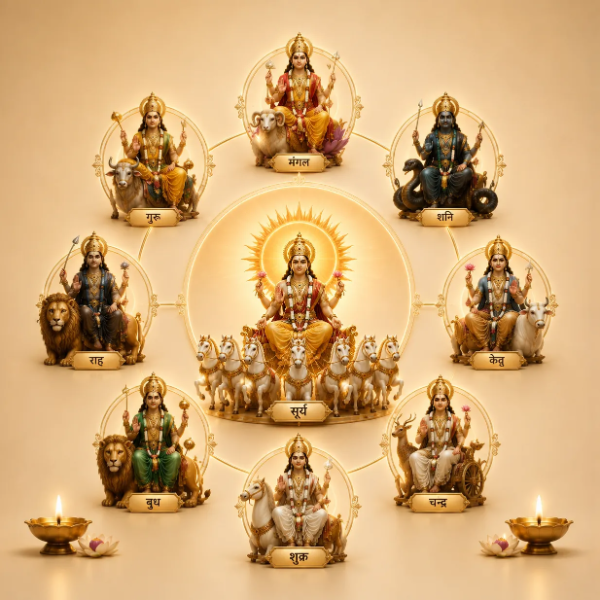
This profound mantra is a devotional salutation to Lord Mangala, also revered as Kartikeya or Kumara, and associated with the planet Mars in Vedic astrology. It reveres him as 'Dharani Garbha Sambhootam', signifying his birth from the womb of Mother Earth (Bhoomi Devi), an aspect highlighting his grounded strength and connection to our physical existence. The phrase 'Vidyut Kanti Samaprabham' describes his dazzling effulgence, radiant like the flash of lightning, symbolizing his intense energy, transformative power, and ability to dispel darkness. He is addressed as 'Kumaram', the eternally youthful warrior, and 'Shaktihastam Cha', indicating his wielding of the Shakti (spear or lance), a divine weapon representing divine power, discernment, and the ability to overcome obstacles. Finally, 'Mangalam Pranamamyaham' is a humble prostration to this auspicious deity, seeking his blessings for welfare, courage, and protection from negative influences.
Benefits & Science
Benefits of Chanting:
Chanting the Mangala Dhyana Mantra is believed to confer a multitude of benefits, primarily by harmonizing the energies associated with the planet Mars. It is widely regarded for its capacity to instill profound courage and unwavering confidence, empowering individuals to confront challenges with a resilient spirit. By appeasing Mangala, devotees may experience a reduction in aggression and impulsiveness, leading to greater emotional balance and self-control. The mantra is particularly efficacious in mitigating the malefic effects of Mars (Mangal Dosha) in one's astrological chart, which can positively impact marital harmony and overall well-being. Regular chanting is said to enhance physical strength, vitality, and boost the immune system, aligning with Mars' association with vigor and stamina. Furthermore, it fosters determination and willpower, aiding in the pursuit of goals and overcoming procrastination. Spiritually, it acts as a shield against negative energies, promoting protection and a sense of security, while also helping alleviate financial burdens and promoting prosperity by aligning one's actions with cosmic timing and energy.
Scientific Perspective:
From a contemporary scientific perspective, mantra chanting involves rhythmic vocalization that can induce specific physiological and neurological responses. The consistent vibrations produced by chanting activate the vagus nerve, which plays a crucial role in regulating heart rate, digestion, and stress responses, thereby promoting relaxation and reducing anxiety. The repetitive nature of the mantra helps to synchronize brainwave patterns, often shifting them from high-frequency beta states (associated with active thought) to lower-frequency alpha and theta states, which are linked to deep relaxation, enhanced focus, creativity, and meditative absorption. This neuroplastic effect can lead to improved cognitive function, emotional regulation, and a greater sense of well-being. The act of chanting requires sustained attention, effectively training the mind to focus, thereby reducing mental clutter and fostering clarity. The psychological benefits include increased self-awareness, positive affirmation, and a sense of connection to a higher purpose, contributing to overall mental and emotional resilience. While not 'magic,' the systematic practice taps into the mind-body connection to foster tangible positive changes.
Mythology & Origin
Mantra Origin Saga:
The origin of Mangala is multifaceted in Hindu mythology. One prominent narrative describes him as being born from the sweat drop of Lord Shiva, which fell on the Earth when Shiva was in a state of deep meditation. The Earth Goddess, Bhoomi Devi (Dharani), nurtured this drop, and from it emerged a beautiful child with a fiery complexion, hence named Mangala (Auspicious) or Angaraka (Fiery Red). Another tradition links his birth to Lord Vishnu's Varaha avatar. When Vishnu, in his boar form, lifted the Earth from the cosmic waters, Bhoomi Devi conceived, and Mangala was born from this union, signifying his deep connection to the Earth. He is also often identified with Kartikeya (Skanda or Kumara), the divine warrior son of Shiva and Parvati, born to destroy the demon Tarakasura. This association highlights his martial prowess, leadership qualities, and role as a protector against evil.
Scriptures Mentions:
The reverence for Mangala is deeply embedded in various Hindu scriptures, particularly the Puranas and texts related to Jyotish (Vedic Astrology). The Brahma Vaivarta Purana details his birth and significance. The Skanda Purana extensively describes the exploits of Kartikeya, with whom Mangala is often associated, emphasizing his role as a divine commander and protector. Chapters in Agni Purana and Padma Purana also mention planetary deities and their worship. Furthermore, numerous Graha Stotras (hymns to planets) and astrological treatises like the Brihat Parashara Hora Shastra elucidate Mangala's characteristics, effects, and remedies for planetary appeasement. The mantra itself is a classical Dhyana Sloka, found in various traditional prayer compilations dedicated to the Navagrahas (nine planets).
Associated Rishi & Deity:
The primary deities associated with this mantra are Lord Mangala himself, recognized as the presiding deity of the planet Mars. He is often seen as an embodiment of raw energy and assertive power. Due to their shared attributes of valor, protection, and martial prowess, Mangala is intimately linked with Kartikeya (Skanda, Murugan, Kumara), who is revered as the commander-in-chief of the celestial armies. The Earth Goddess, Bhoomi Devi or Dharani, is also a key figure, as Mangala is believed to be born from her. Lord Shiva, as his divine father in some accounts, and Parvati, as his mother (in the context of Kartikeya), are also integrally connected to his mythological lineage and divine energy.
Historical Significance:
Historically, the worship of planetary deities, including Mangala, dates back to ancient Vedic times, deeply influencing the development of Jyotish or Vedic astrology. The movement and positions of celestial bodies like Mars were meticulously observed by ancient Indian astronomers and sages, who attributed specific energies and influences to them on human destiny and earthly events. Mangala's veneration became crucial for individuals seeking to mitigate astrological afflictions (like Mangal Dosha) or to harness his positive energies for courage, success in warfare, and overcoming adversaries. Temples dedicated to Navagrahas, with a specific shrine for Mangala, have existed for centuries, indicating a sustained cultural and religious practice across the Indian subcontinent. The mantra's existence reflects a profound understanding of cosmic cycles and the human desire to align with these universal forces for harmony and prosperity.
Frequently Asked Questions (FAQs)
Who is Lord Mangala, and what does this mantra represent?
What are the primary benefits of chanting the Mangala Dhyana Mantra?
Is this mantra only for those with Mangal Dosha?
What is the significance of Mangala being "born from Earth"?
When is the best time to chant this mantra?
Are there any specific rules or rituals for chanting this mantra?
How does chanting affect one's 'Mars energy' or personality?
What is the connection between Mangala and Kartikeya?
Mantra Sadhana Guidelines
Best Time to Chant
- Mondays are especially auspicious and beneficial.
- Early morning Brahma Muhurta (4:00 - 6:00 AM) is best.
- Highly fruitful during Pradosh Kaal and Mahashivratri.
- Chant before commencing any auspicious task or ritual.
Other Popular Navgrah Mantras
Other Devotional Categories

Download App
पंचांग तिथि, त्यौहार, व्रत, उत्सव, एकादशी, आरती संग्रह, मंत्र, व्रत कथा