
Shukra Stuti Mantra (Bhargava Pranamamyaham)
Explore the profound Shukra Stuti Mantra, dedicated to Venus (Shukracharya). Uncover its spiritual meaning, benefits for wealth, relationships, and wisdom. Learn to chant this powerful Vedic mantra.
Meaning of Mantra
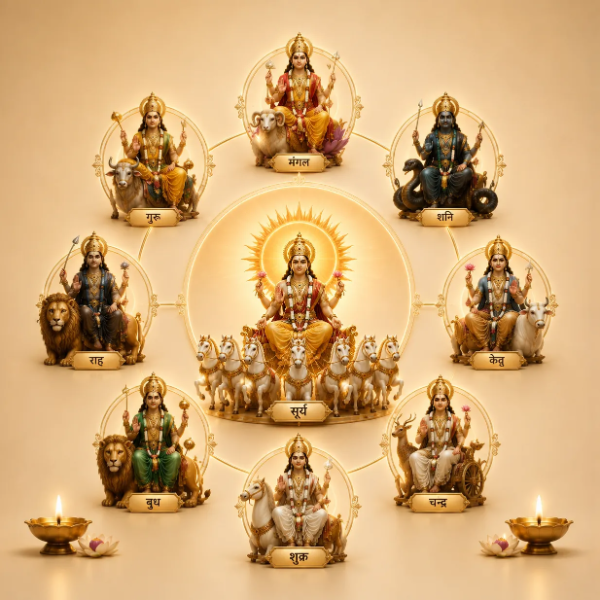
I bow down to Bhargava (Shukracharya), who shines with the radiance of snow-white jasmine and the stalk of a lotus, who is the supreme preceptor of the Daityas (demons), and the expounder of all scriptures.
Benefits & Science
Benefits of Chanting:
Regular chanting of the Shukra Stuti Mantra is believed to harmonize the planetary influence of Venus (Shukra) in one's astrological chart, promoting beneficial outcomes. By aligning with the positive vibrations of Shukra, individuals may experience enhanced creativity, improved relationships, and a heightened sense of aesthetic appreciation. The mantra subtly influences the subconscious mind, fostering a positive outlook towards abundance and luxury, not just in material terms but also in the richness of experiences and emotional connections. It is said to refine one's demeanor, promoting diplomacy, charm, and attractiveness, which can naturally lead to greater social and financial opportunities. Furthermore, by invoking the 'expounder of all scriptures,' the mantra subtly encourages the development of deeper wisdom and a comprehensive understanding of life's various facets, leading to a more balanced and fulfilling life.
Scientific Perspective:
From a scientific standpoint, the rhythmic chanting of the Shukra Stuti Mantra, like other Vedic mantras, can induce a meditative state that positively influences brainwave patterns. The repetitive vocalization and focused attention can shift brain activity from beta waves (associated with alertness and stress) towards alpha and theta waves (associated with relaxation, creativity, and deep introspection). This state activates the parasympathetic nervous system via the vagus nerve, promoting calmness, reducing stress, and enhancing overall well-being. The precise vibrational frequencies of Sanskrit phonemes are thought to stimulate specific areas of the brain, improving cognitive functions, memory, and emotional regulation. Over time, this practice can contribute to neuroplasticity, fostering new neural pathways that support positive behavioral changes, emotional resilience, and a more harmonious perception of the world, aligning with the qualitative attributes of Venus.
Mythology & Origin
Mantra Origin Saga:
Shukracharya is the son of the great sage Maharishi Bhrigu and Ushana. He is renowned as the preceptor (Guru) of the Daityas (demons) and the Asuras. He underwent severe austerities to please Lord Shiva and was granted the 'Mrita Sanjeevani Vidya,' the knowledge to revive the dead, making him invincible and indispensable to the Asuras in their battles against the Devas.
Scriptures Mentions:
Shukracharya's exploits and wisdom are extensively mentioned in various Hindu scriptures, including the Puranas (like Bhagavata Purana, Skanda Purana, Agni Purana, Matsya Purana), Mahabharata, and numerous Jyotish (astrology) texts. He is a pivotal character in many mythological narratives, particularly those involving the ongoing conflicts between Devas and Asuras.
Associated Rishi & Deity:
Associated with Maharishi Bhrigu (his father), Goddess Ushana (his mother), Lord Shiva (from whom he received Mrita Sanjeevani Vidya), Lord Brahma (who granted him boons), and various Daityas/Asuras (his disciples).
Historical Significance:
In Vedic astrology, Shukra (Venus) represents love, beauty, marriage, luxury, arts, creativity, and wealth. Shukracharya's story underscores the importance of a Guru's role in guiding individuals, irrespective of their perceived 'good' or 'bad' nature. His philosophical insights are revered, and his position as a planetary deity influences human destinies, making his worship historically and culturally significant for those seeking balance, prosperity, and harmony in life.
Frequently Asked Questions (FAQs)
Who is Shukracharya and why is this mantra dedicated to him?
What kind of benefits can one expect from chanting the Shukra Stuti Mantra?
Is there a specific day or time best suited for chanting this mantra?
Can anyone chant the Shukra Stuti Mantra, or are there prerequisites?
What is the significance of the phrase 'Himakunda Mrinalabham'?
How does chanting this mantra affect one's astrological chart?
Are there any precautions or specific rituals to follow while chanting?
What if I cannot pronounce the Sanskrit perfectly?
Mantra Sadhana Guidelines
Best Time to Chant
- Mondays are especially auspicious and beneficial.
- Early morning Brahma Muhurta (4:00 - 6:00 AM) is best.
- Highly fruitful during Pradosh Kaal and Mahashivratri.
- Chant before commencing any auspicious task or ritual.
Other Popular Navgrah Mantras
Other Devotional Categories

Download App
पंचांग तिथि, त्यौहार, व्रत, उत्सव, एकादशी, आरती संग्रह, मंत्र, व्रत कथा