
Jai Shri Ram
Explore the profound spiritual meaning, benefits, and correct chanting guide for the 'Jai Shri Ram' mantra. Discover its history, philosophical depth, and scientific impact on well-being and spiritual growth.
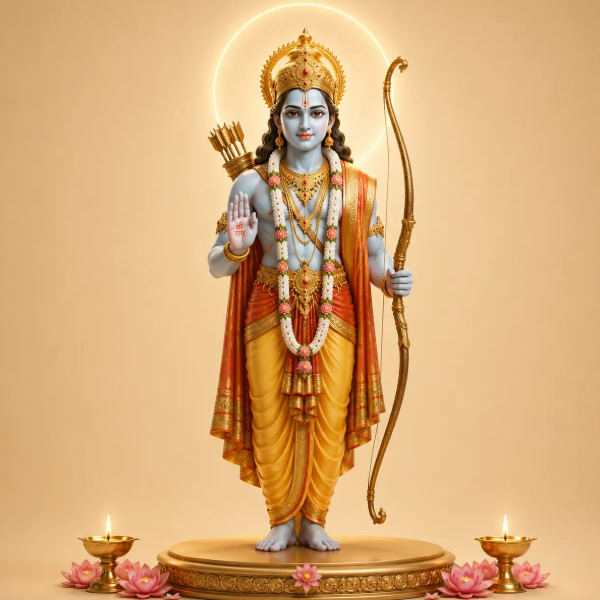
Meaning of Mantra
"Victory to Lord Rama," "Hail to the revered Rama," or "Glory to the divine Rama." This mantra is a powerful invocation of Lord Rama, expressing profound reverence, devotion, and a prayer for the establishment of Dharma (righteousness) and peace. It signifies the triumph of good over evil and serves as a salutation to the ideal king, son, husband, and human being (Maryada Purushottam).
Benefits & Science
Benefits of Chanting:
Regular chanting of "Jai Shri Ram" is widely believed to cultivate a profound sense of inner peace and serenity by calming the mind and reducing mental chatter. It tends to instill courage and inner strength, empowering individuals to face life's adversities with resilience. Devotees often experience enhanced spiritual growth, feeling a deeper connection to divine principles and a greater alignment with their inner truth. The positive vibrations generated are thought to foster a protective energetic shield, encouraging adherence to righteous conduct (Dharma) and promoting mental clarity, focus, and emotional balance, ultimately contributing to a noticeable reduction in stress and anxiety levels. It is also seen as a powerful tool for fostering unity and community spirit among devotees.
Scientific Perspective:
The rhythmic, repetitive chanting of "Jai Shri Ram" generates specific sound vibrations that can influence brainwave patterns. This focused vocalization and repetitive articulation can lead to a shift from beta waves (associated with active thought) to alpha or even theta states, which are characteristic of deep relaxation, heightened creativity, and meditative absorption. The deliberate exhalation and sustained vocalization involved may stimulate the vagus nerve, which plays a crucial role in the parasympathetic nervous system. This activation promotes a 'rest and digest' response, reducing heart rate, lowering blood pressure, and decreasing cortisol levels, thereby alleviating stress and fostering a sense of calm and well-being. The sustained attention also enhances neural pathways associated with focus and emotional regulation.
Mythology & Origin
Mantra Origin Saga:
The mantra "Jai Shri Ram" is an invocation to Lord Rama, the revered seventh avatar of Vishnu, born in Ayodhya. Its origin is deeply rooted in the ancient devotional tradition of Vaishnavism, which emphasizes Bhakti (devotion) towards Vishnu's manifestations. The chant became a popular expression of devotion, celebrating Lord Rama's ideal life, virtues, and divine exploits, particularly his triumphant victory over the demon king Ravana, which symbolized the establishment of Dharma over Adharma.
Scriptures Mentions:
While not a specific Vedic hymn, the essence and reverence for Lord Rama, central to "Jai Shri Ram," are extensively detailed and glorified in numerous Hindu scriptures. Key among these are the *Ramayana*, originally composed by Maharishi Valmiki, and the *Ramcharitmanas*, a devotional retelling by Goswami Tulsidas. Other Puranas, such as the *Vishnu Purana* and *Bhagavata Purana*, also contain accounts of Lord Rama's life, virtues, and divine pastimes, establishing his status as a supreme deity.
Associated Rishi & Deity:
The central deity is Lord Rama himself. Maharishi Valmiki is credited with authoring the original Ramayana, while Goswami Tulsidas played a pivotal role in popularizing Rama Bhakti through his Ramcharitmanas. Lord Hanuman, the quintessential devotee of Rama, is inextricably linked with this chant, as he constantly invoked "Jai Shri Ram" during his endeavors and remains an inspiring figure for all devotees. Many other sages and saints throughout history have also promoted devotion to Rama.
Historical Significance:
"Jai Shri Ram" has historically served as a unifying chant for millions of devotees across the Indian subcontinent for centuries, fostering spiritual unity and cultural identity. It became a prominent slogan during the Bhakti movement, inspiring people to lead righteous lives and promoting communal harmony through devotion. In modern times, particularly in the context of the Ayodhya Ram Temple movement, it has also evolved into a powerful cultural and political expression, symbolizing deep reverence for Lord Rama and articulating a specific aspect of Hindu identity and heritage.
Frequently Asked Questions (FAQs)
What is the primary significance of chanting 'Jai Shri Ram'?
Who is Lord Rama, and why is 'Shri' used with his name?
Can people from any background or religion chant 'Jai Shri Ram'?
Does chanting 'Jai Shri Ram' offer any immediate or guaranteed results?
Is 'Jai Shri Ram' purely a religious chant, or does it have other connotations?
How often should one chant 'Jai Shri Ram' for best spiritual impact?
What is the correct way to pronounce 'Jai Shri Ram'?
Are there any specific days or occasions particularly auspicious for chanting this mantra?
Mantra Sadhana Guidelines
Best Time to Chant
- Mondays are especially auspicious and beneficial.
- Early morning Brahma Muhurta (4:00 - 6:00 AM) is best.
- Highly fruitful during Pradosh Kaal and Mahashivratri.
- Chant before commencing any auspicious task or ritual.
Other Popular Lord Shri Ram Mantras
Other Devotional Categories


Download App
पंचांग तिथि, त्यौहार, व्रत, उत्सव, एकादशी, आरती संग्रह, मंत्र, व्रत कथा