
Ramaya Ramabhadraya Ramachandraya Vedhase. Raghunathaya Nathaya Sitayah Pataye Namah.
Explore the profound 'Ramaya Ramabhadraya' Mantra. Discover its deep spiritual meaning, benefits, pronunciation, and how to chant for inner peace & divine blessings.
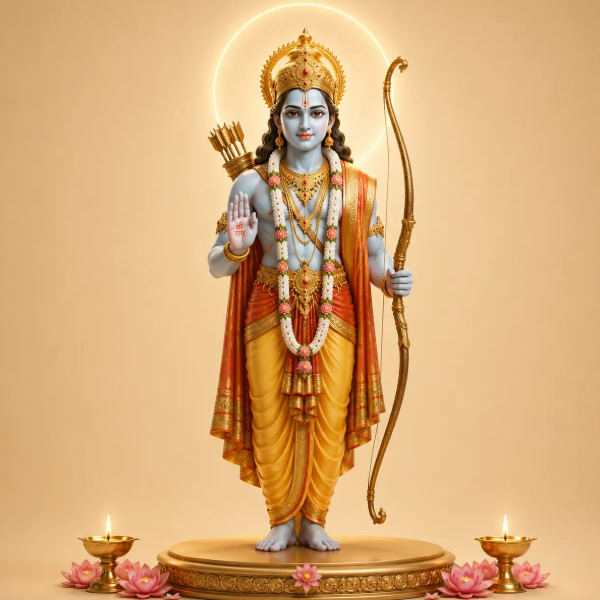
Meaning of Mantra
Salutations to Rama, the auspicious Rama, the moon-like Rama, the creator and ordainer. Salutations to the Lord of the Raghu dynasty, the protector, the husband of Sita.
Benefits & Science
Benefits of Chanting:
Chanting the Ramaya Mantra regularly can lead to profound spiritual alignment, fostering a sense of inner peace and tranquility. Devotees often report a feeling of divine protection and an enhanced ability to navigate life's challenges with resilience. It aids in cultivating virtues such as compassion, righteousness, and humility, reflecting the ideals of Lord Rama. The rhythmic recitation can help in achieving emotional balance, potentially reducing anxiety and stress. Over time, consistent practice may deepen one's connection to the divine, potentially purifying karmic impressions and guiding one towards self-realization and a life of dharma. It is believed to bring harmony within families and personal relationships by invoking the ideal principles embodied by Rama and Sita.
Scientific Perspective:
The repetitive chanting of mantras generates specific sound vibrations that resonate throughout the body and mind. These vibrations can stimulate the vagus nerve, which plays a crucial role in regulating the body's 'rest and digest' parasympathetic nervous system, leading to reduced stress and enhanced relaxation. The rhythmic nature of chanting can synchronize brainwave patterns, potentially shifting from a high-frequency beta state (associated with alertness and stress) to lower-frequency alpha or theta states (associated with calm, creativity, and deep meditation). This physiological shift can improve focus, emotional regulation, and overall well-being. The Sanskrit phonemes are carefully constructed to produce specific energetic effects, impacting neural pathways and promoting a balanced mental state.
Mythology & Origin
Mantra Origin Saga:
This mantra is a traditional devotional prayer dedicated to Lord Rama, often found in various Puranas, Kavyas, and Stutis (hymns of praise). It encapsulates the essence of the reverence for Rama as the ideal king, son, husband, and a manifestation of Vishnu. Its precise origin as a single, distinct mantra is difficult to pinpoint to one specific text, but the components are deeply rooted in the devotional literature surrounding the Ramayana and various ancient scriptures.
Scriptures Mentions:
Ramayana (Valmiki Ramayana, Ramcharitmanas by Tulsidas), Vishnu Purana, Bhagavata Purana, various Stotra literature, Agni Purana. These scriptures extensively describe Lord Rama's life, virtues, and divine attributes, forming the basis for such devotional hymns and prayers.
Associated Rishi & Deity:
Lord Rama (as the principal deity), Maharishi Valmiki (author of Ramayana), Goswami Tulsidas (author of Ramcharitmanas), various Rishis and Devatas who composed or chanted praises of Rama. Devotees of Lord Vishnu and particularly Lord Rama across ages.
Historical Significance:
Lord Rama is revered as a historical figure and a divine incarnation, whose reign (Rama Rajya) symbolizes an era of perfect justice, righteousness, and prosperity. The chanting of his names and mantras has been a cornerstone of Hindu devotional practices for millennia, shaping cultural values, ethics, and moral conduct across generations. It continues to inspire millions to uphold dharma and strive for an ideal way of life, reflecting the timeless values of duty, sacrifice, and unwavering devotion.
Frequently Asked Questions (FAQs)
What is the primary purpose of chanting the Ramaya Ramabhadraya mantra?
How does this mantra connect to the concept of Dharma?
Can chanting this mantra help in overcoming life's challenges?
What does 'वेधसे' (Vedhase) signify in the context of Lord Rama?
Can this mantra be chanted by anyone, irrespective of their religious background?
How does chanting this mantra foster family harmony?
What is the importance of chanting 108 times?
Are there any specific offerings or rituals associated with this mantra?
Mantra Sadhana Guidelines
Best Time to Chant
- Mondays are especially auspicious and beneficial.
- Early morning Brahma Muhurta (4:00 - 6:00 AM) is best.
- Highly fruitful during Pradosh Kaal and Mahashivratri.
- Chant before commencing any auspicious task or ritual.
Other Popular Lord Shri Ram Mantras
Other Devotional Categories


Download App
पंचांग तिथि, त्यौहार, व्रत, उत्सव, एकादशी, आरती संग्रह, मंत्र, व्रत कथा