Rama Rameti Rameti Rame Rame Manorame | Sahasranama Tattulyam Ramanaama Varanane ||
Unlock inner peace and spiritual liberation with the Rama Rameti Mantra. Discover its deep meaning, benefits, scientific perspective, and learn how to chant this powerful divine name for holistic well-being.
Meaning of Mantra
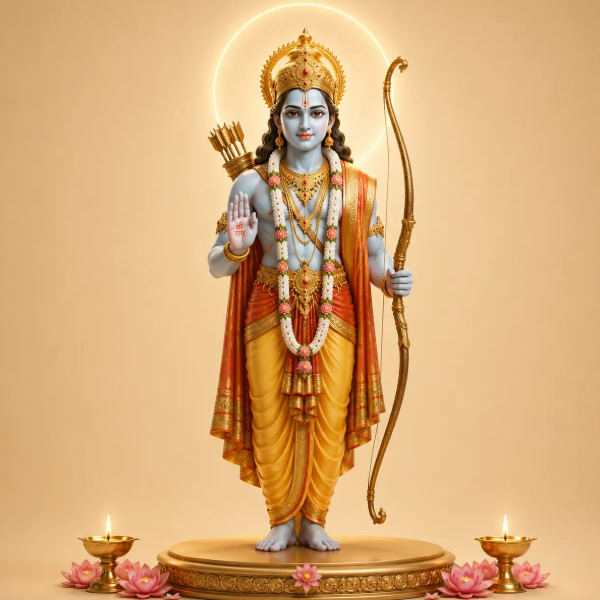
O Parvati, the one with the beautiful face, I constantly revel in the name of Rama, chanting 'Rama, Rama, Rama'. The single name of Rama is equivalent to a thousand names of Vishnu.
Benefits & Science
Benefits of Chanting:
Consistent chanting of the Rama Taraka Mantra offers a spectrum of transformative benefits. It profoundly calms the mind, cultivating inner peace and reducing mental agitation. Many practitioners report a significant reduction in stress and anxiety, leading to improved emotional regulation and overall well-being. The mantra serves as a potent tool for spiritual liberation, helping to dissolve egoic tendencies and fostering a deeper connection with the divine essence within. It enhances mental clarity and focus, potentially improving cognitive functions and decision-making abilities. Regular chanting is believed to purify karmic impressions, paving the way for spiritual progress and an unburdened existence. Furthermore, it strengthens one's devotion (Bhakti), inviting a protective spiritual shield that wards off negative influences and attracts positive vibrations. This practice gently guides an individual towards self-realization, integrating the individual soul with the universal consciousness over time, fostering a state of lasting contentment and harmony.
Scientific Perspective:
From a scientific standpoint, the rhythmic chanting of the Rama Rameti mantra engages the vocal cords and respiratory system in a structured, repetitive manner, which can induce a meditative state. This repetitive vocalization stimulates the vagus nerve, a critical component of the parasympathetic nervous system, responsible for the 'rest and digest' response. Activation of the vagus nerve leads to a reduction in heart rate variability, lower blood pressure, and a decrease in cortisol levels (the stress hormone), promoting physiological relaxation and a sense of calm. The sustained focus required for chanting can shift brainwave patterns from beta to alpha and theta states, associated with deep relaxation, creativity, and heightened receptivity. The self-generated sound vibrations create a resonant field within the body, potentially harmonizing cellular activity and promoting neural plasticity. This holistic engagement of mind and body through mantra practice contributes to enhanced neuro-cognitive functions, improved emotional regulation, and a generalized sense of well-being, supported by the release of beneficial neurotransmitters like endorphins and serotonin.
Mythology & Origin
Mantra Origin Saga:
This sacred verse is enshrined in the Padma Purana, specifically in the Uttara Khanda, Chapter 72. It is presented as a profound dialogue between Lord Shiva and his consort, Goddess Parvati. Within this context, Lord Shiva, the Mahayogi and the very embodiment of cosmic dissolution, reveals to Parvati the unparalleled glory and liberating power of merely uttering the name 'Rama.' He emphasizes that in the Kali Yuga, fraught with challenges, the simplest yet most potent path to liberation (Taraka) and spiritual realization is the chanting of Rama's divine name. This revelation positions Shiva as the supreme devotee of Rama, underscoring the universality of Rama's divine appeal across all realms and deities.
Scriptures Mentions:
The primary scriptural reference for this specific mantra is the Padma Purana (Uttara Khanda, Chapter 72). However, the glory of Rama Nama is extensively praised across various other Puranas, including the Skanda Purana, Agni Purana, and numerous Upa-Puranas. The Valmiki Ramayana, while narrating Rama's epic life, implicitly and explicitly highlights the power associated with his name. Later devotional texts, particularly the Ramcharitmanas by Tulsidas, extensively elaborate on the 'Nama Mahima' (glory of the name) of Rama, making it a cornerstone of Bhakti philosophy.
Associated Rishi & Deity:
The dialogue originates from **Lord Shiva** (the speaker and glorifier of Rama's name), with **Goddess Parvati** (the listener and recipient of this divine wisdom). The mantra itself invokes and centers around **Lord Rama**, the seventh avatar of Vishnu, revered as Maryada Purushottam (the ideal man) and the embodiment of Dharma. The tradition of chanting Rama's name is championed by countless saints and devotees throughout history.
Historical Significance:
The Rama Taraka Mantra, and the broader tradition of chanting Rama's name, has profoundly influenced India's spiritual and cultural landscape for millennia. It served as a powerful unifying force during various Bhakti movements, transcending caste and social barriers by offering a direct, accessible path to spiritual realization for everyone. Saints like Tulsidas, Sant Eknath, Tyagaraja, and Samarth Ramdas popularized Rama Nama, embedding it deeply into the collective consciousness. Historically, this mantra provided solace, courage, and spiritual direction during times of immense social and political upheaval. Its simplicity and profound message of divine grace have ensured its timeless relevance, making it a cornerstone of Hindu devotional practice and a symbol of faith and resilience across generations.
Frequently Asked Questions (FAQs)
Who can chant this mantra?
Is it necessary to understand the meaning to get benefits?
What is the significance of Lord Shiva chanting Rama's name?
Can this mantra be chanted silently (mentally)?
How quickly can one experience the benefits?
Is there any specific time or place for chanting?
What does 'Taraka' mean in Rama Taraka Mantra?
Can children chant this mantra?
Mantra Sadhana Guidelines
Best Time to Chant
- Mondays are especially auspicious and beneficial.
- Early morning Brahma Muhurta (4:00 - 6:00 AM) is best.
- Highly fruitful during Pradosh Kaal and Mahashivratri.
- Chant before commencing any auspicious task or ritual.
Other Popular Lord Shri Ram Mantras
Other Devotional Categories


Download App
पंचांग तिथि, त्यौहार, व्रत, उत्सव, एकादशी, आरती संग्रह, मंत्र, व्रत कथा