
Om Ram Ramaya Namah
Explore the profound meaning, spiritual benefits, and correct chanting methods of the Om Ram Ramaya Namah mantra. A powerful invocation to Lord Rama for peace & protection.
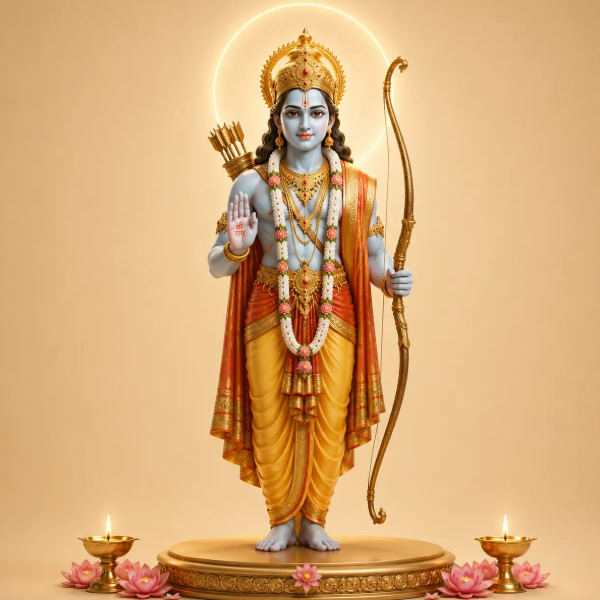
Meaning of Mantra
This powerful mantra, 'Om Ram Ramaya Namah,' is a profound invocation and salutation to Lord Rama. 'Om' connects the chanter to the universal cosmic energy and consciousness. 'Ram' is the potent Bija (seed) mantra, which acts as a direct conduit to the divine qualities and protective energy of Lord Rama. 'Ramaya Namah' expresses humble reverence and complete surrender to Lord Rama, seeking his blessings, guidance, and the embodiment of his righteous virtues. It essentially means, 'I bow to Lord Rama, who is represented by the primal sound Om and whose essence is captured in the Bija mantra Ram.'
Benefits & Science
Benefits of Chanting:
Chanting 'Om Ram Ramaya Namah' regularly is believed to create a positive energetic field around the chanter. The precise vibrations generated by the mantra are thought to harmonize the body's energy centers, leading to a profound sense of inner peace and mental clarity. This can help in reducing anxiety and stress, fostering a calm and focused mind. Devotees often experience increased courage, resilience, and self-confidence, helping them navigate life's challenges with greater equanimity. Spiritually, it is believed to invoke Lord Rama's protective grace, guiding one towards righteous actions and facilitating spiritual growth by aligning one's character with divine virtues. This mantra can also promote greater empathy and understanding, leading to improved interpersonal relationships.
Scientific Perspective:
From a scientific viewpoint, the repetitive chanting of 'Om Ram Ramaya Namah' can induce a meditative state that impacts brain activity. The 'Om' sound is known to stimulate the vagus nerve, which plays a critical role in the parasympathetic nervous system, leading to a 'rest and digest' response, reducing heart rate, and lowering blood pressure. The specific phonetics and rhythmic repetition can synchronize brain hemispheres and promote the production of alpha and theta brainwaves, associated with deep relaxation, increased creativity, and heightened awareness. The focused attention required for chanting acts as a form of mindfulness, training the brain to stay in the present moment, thereby reducing rumination and improving cognitive functions. The vibrations generated resonate through the vocal cords, chest, and head, potentially stimulating various glands and nerve endings, contributing to overall well-being and stress reduction.
Mythology & Origin
Mantra Origin Saga:
The mantra 'Om Ram Ramaya Namah' finds its roots in the ancient Vedic and Puranic traditions of Hinduism, particularly within the Vaishnava sect which reveres Lord Rama as an avatar of Vishnu. While the exact historical origin of this specific Bija mantra combination is not explicitly cited as a single event, the devotion to Lord Rama and the use of 'Ram' as a potent Bija mantra has been prevalent for millennia. It is a derivative of more extensive Rama mantras and is a concise way to invoke the divine energy of Rama, similar to how Tarak Mantra is used.
Scriptures Mentions:
Lord Rama's life and divine attributes are primarily glorified in the epic 'Ramayana' (composed by Valmiki) and 'Ramcharitmanas' (by Tulsidas). Mentions of Rama's glory and various mantras associated with him can also be found in several Puranas (like Skanda Purana, Padma Purana, Vayu Purana) and some Upanishads (like Rama Rahasya Upanishad, Rama Tapini Upanishad). The concept of Bija mantras and their spiritual efficacy is deeply embedded in Tantric and Vedic literature.
Associated Rishi & Deity:
The primary deity associated is Lord Rama, the seventh avatar of Vishnu. Sages like Valmiki and Tulsidas are historically significant for compiling and popularizing the narratives of Rama's life and virtues. Many Vaishnava saints and Gurus across various traditions have advocated the chanting of Rama's names and mantras for spiritual upliftment.
Historical Significance:
The chanting of Rama's name and related mantras has profoundly influenced Indian culture, ethics, and spirituality for thousands of years. It represents the triumph of good over evil, adherence to dharma, and the ideal family and social values. This mantra, being a condensed form, carries the essence of this rich tradition, providing a direct link for devotees to connect with these timeless principles and divine protection, especially during challenging times.
Frequently Asked Questions (FAQs)
What is the primary significance of 'Om Ram Ramaya Namah'?
Can anyone chant this mantra, regardless of their religious background?
What does the 'Ram' Bija mantra signify?
Are there any specific benefits for mental well-being?
How often should I chant this mantra?
What is the importance of 'Namah' in the mantra?
Can this mantra help in overcoming obstacles?
Is there a specific way to pronounce the 'Om' in the mantra?
Mantra Sadhana Guidelines
Best Time to Chant
- Mondays are especially auspicious and beneficial.
- Early morning Brahma Muhurta (4:00 - 6:00 AM) is best.
- Highly fruitful during Pradosh Kaal and Mahashivratri.
- Chant before commencing any auspicious task or ritual.
Other Popular Lord Shri Ram Mantras
Other Devotional Categories


Download App
पंचांग तिथि, त्यौहार, व्रत, उत्सव, एकादशी, आरती संग्रह, मंत्र, व्रत कथा