
Mangalam Bhagavan Rama Mantra: Invoking All Auspiciousness
Explore the profound Mangalam Bhagavan Rama mantra. Uncover its spiritual meaning, benefits, pronunciation, and how this Vedic chant brings auspiciousness & divine protection.
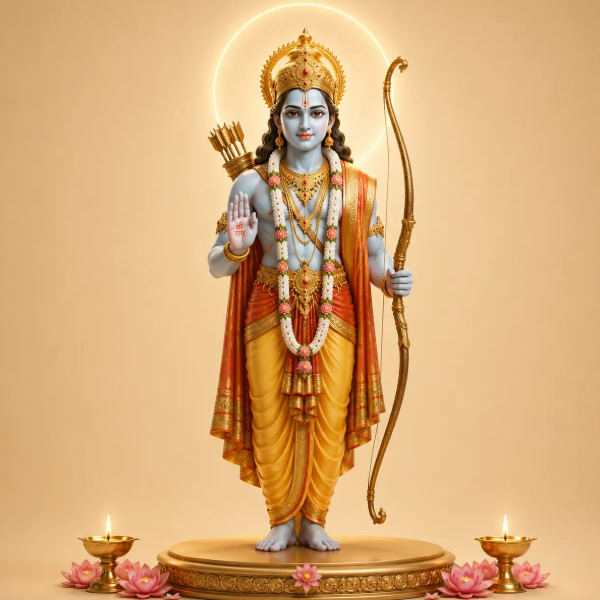
Meaning of Mantra
Auspicious is Lord Rama, auspicious is the son of Dasharatha. Auspicious is Rama, the husband of Sita, auspicious is the purifier of the worlds. This mantra beautifully encapsulates the essence of Lord Rama as the embodiment of all that is pure, good, and blessed. It declares that Lord Rama, whether seen as the divine Bhagavan, the noble son of King Dasharatha, or the devoted husband of Sita, is the ultimate source of auspiciousness and the redeemer of all existence.
Benefits & Science
Benefits of Chanting:
Chanting the Mangalam Bhagavan Rama mantra cultivates a deep sense of auspiciousness and positive energy. Regular recitation can help in fostering mental tranquility, reducing stress, and improving focus, leading to a more harmonious life. Spiritually, it aids in purifying one's aura and intentions, attracting divine grace and protection. Devotees often experience a subtle yet profound shift towards a more positive outlook, finding strength to overcome challenges and cultivate virtues like compassion and righteousness. This practice is believed to align the individual with cosmic energies of well-being, paving the way for spiritual progress and material prosperity in a balanced manner.
Scientific Perspective:
From a scientific lens, the rhythmic chanting of the "Mangalam Bhagavan Rama" mantra, like other mantras, involves specific sound vibrations that can influence brainwave patterns. Repetitive vocalization at a steady pace can induce alpha and theta brainwave states, associated with relaxation, heightened awareness, and meditative states. This can stimulate the vagus nerve, which plays a crucial role in regulating heart rate variability, digestion, and stress response, leading to a reduction in anxiety and an enhancement of overall well-being. The focused attention required during chanting also strengthens neural pathways related to concentration and mindfulness, potentially improving cognitive functions and emotional regulation.
Mythology & Origin
Mantra Origin Saga:
This particular verse is part of a larger tradition of invoking Lord Rama's attributes and auspiciousness. While not attributed to a single, distinct 'origin story' like a specific event, it emerged from the deep devotion and reverence for Lord Rama across various Puranas, Itihasas (epics like Ramayana), and devotional literature. It summarizes the universal belief in Rama as the embodiment of Dharma and source of all good, crystallizing centuries of spiritual wisdom into a concise prayer.
Scriptures Mentions:
The glorification of Lord Rama, his virtues, and his role as the epitome of righteousness are extensively documented in various Hindu scriptures. Key texts include: Valmiki Ramayana, Ramcharitmanas by Tulsidas, Vishnu Purana, Bhagavata Purana, Padma Purana, and various Upanishads and Dharma Shastras that touch upon the ideals Rama exemplifies.
Associated Rishi & Deity:
Sages: Maharishi Valmiki (credited with composing the original Ramayana), Sant Tulsidas (author of Ramcharitmanas, who popularized Rama bhakti). Deities: Lord Rama himself (as the central deity), Devi Sita (his consort, representing purity and sacrifice), Lakshmana, Hanuman (devoted servant and embodiment of strength and devotion).
Historical Significance:
The historical significance of the Mangalam Bhagavan Rama mantra and the broader devotion to Rama is immense. It has shaped Indian culture, ethics, and societal values for millennia. Rama represents the ideal king (Rama Rajya), the ideal son, husband, and brother, serving as a moral compass. The chanting of such mantras has served as a continuous thread connecting generations to these ideals, inspiring righteousness, courage, and devotion in the face of adversity, and reinforcing the cultural identity rooted in Dharma.
Frequently Asked Questions (FAQs)
What is the primary significance of the Mangalam Bhagavan Rama mantra?
Is this mantra suitable for everyone, regardless of their religious background?
How often should one chant this mantra for optimal benefits?
What specific virtues of Lord Rama are highlighted in this mantra?
Can this mantra help in overcoming obstacles or challenges?
Is there a particular time of day when chanting this mantra is most effective?
What is the spiritual impact of understanding the mantra's meaning while chanting?
Can children chant this mantra?
Mantra Sadhana Guidelines
Best Time to Chant
- Mondays are especially auspicious and beneficial.
- Early morning Brahma Muhurta (4:00 - 6:00 AM) is best.
- Highly fruitful during Pradosh Kaal and Mahashivratri.
- Chant before commencing any auspicious task or ritual.
Other Popular Lord Shri Ram Mantras
Other Devotional Categories


Download App
पंचांग तिथि, त्यौहार, व्रत, उत्सव, एकादशी, आरती संग्रह, मंत्र, व्रत कथा