
Shri Ram Jai Ram Jai Jai Ram
Explore the profound 'Shri Ram Jai Ram Jai Jai Ram' mantra. Uncover its spiritual meaning, philosophical depth, benefits for inner peace, and a complete chanting guide in English & Hindi.
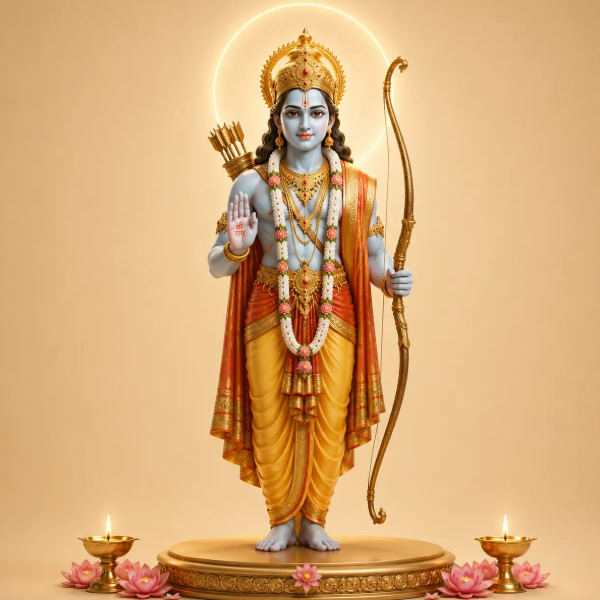
Meaning of Mantra
“Shri Ram Jai Ram Jai Jai Ram” is a profoundly powerful devotional mantra dedicated to Lord Rama, the seventh avatar of Vishnu, embodying righteousness, courage, and compassion. The term "Shri" acts as an honorific, signifying reverence, auspiciousness, and the divine energy (Shakti) associated with Lord Rama, often linked to prosperity and divine grace. "Ram" directly refers to Lord Rama, the ideal king and personification of Dharma, the cosmic law. "Jai" translates to victory, glory, or salutation, expressing triumph and adoration. The repetitive phrase "Jai Jai Ram" intensifies this sentiment, conveying profound veneration, complete surrender to the divine, and celebrating the ultimate triumph of good over evil, truth over falsehood. Collectively, this mantra serves as a heartfelt invocation and a celebration of Lord Rama's divine presence, seeking His blessings for a life guided by virtue and peace.
Benefits & Science
Benefits of Chanting:
Consistent and heartfelt chanting of "Shri Ram Jai Ram Jai Jai Ram" is widely associated with fostering a profound sense of inner peace and tranquility, effectively contributing to a reduction in stress and anxiety levels. This practice deeply cultivates spiritual growth by enhancing devotion and strengthening the connection with the divine, thereby purifying both the mind and the heart. Practitioners frequently report experiencing a palpable sense of divine protection from negative influences and an uplifting infusion of positive energy within their aura. The mantra's repetitive and rhythmic nature significantly enhances concentration and focus, leading to improved mental clarity and greater emotional balance. Over time, consistent engagement with this mantra can support the journey towards self-realization, helping individuals align more closely with their higher purpose and enabling them to walk a path of dharma. It is also traditionally believed to assist in the removal of obstacles and challenges encountered on one's life path, thereby facilitating spiritual and material well-being.
Scientific Perspective:
The rhythmic, repetitive chanting of "Shri Ram Jai Ram Jai Jai Ram" generates specific sound vibrations that can profoundly influence brainwave patterns. Research indicates that such practices can facilitate a shift towards alpha or theta brainwave states, which are intrinsically linked to deep relaxation, meditative states, and enhanced creativity. This vibrational activity can stimulate the vagus nerve, a critical component of the body's parasympathetic nervous system, thereby initiating a comprehensive "relaxation response." The repeated vocalization combined with focused attention enhances neural coherence and promotes neuroplasticity, potentially improving cognitive functions. Furthermore, the sonic resonance of the 'Ram' syllable is theorized to activate and balance specific energy centers (chakras) within the subtle body, contributing to an overall sense of well-being and energetic harmony. This structured repetition also functions as a powerful form of mindfulness meditation, effectively reducing mental chatter and fostering remarkable mental clarity.
Mythology & Origin
Mantra Origin Saga:
This mantra, particularly the profound 'Ram' nama (name), is deeply embedded in the ancient tapestry of Hindu tradition. While not attributed to a single historical origin like a specific Rishi composing it, the chanting of Lord Rama's name has been an integral spiritual practice since the Vedic age, evolving significantly through the Puranic era and gaining immense widespread popularity through the fervent Bhakti movement. It represents an organic expression of devotion that arises spontaneously from the spiritual heartland of India.
Scriptures Mentions:
The unparalleled glory of Rama Nama is extensively extolled in a multitude of Hindu scriptures. The Valmiki Ramayana stands as the primary epic, meticulously narrating the divine life and exploits of Lord Rama. The Adhyatma Ramayana (an integral part of the Brahmanda Purana) and various Puranas such as the Vishnu Purana, Padma Purana, and Skanda Purana, provide elaborate accounts of Lord Rama's divine attributes and the immense power inherent in His sacred name. Furthermore, a vast body of Bhakti literature, notably the Ramcharitmanas by Saint Tulsidas, along with the devotional poetry of revered saints like Kabir and Tyagaraja, powerfully emphasize the profound spiritual significance of "Ram Naam." The "Rama Rahasya Upanishad" is specifically dedicated to unraveling the esoteric significance of Rama Mantras.
Associated Rishi & Deity:
The mantra is intrinsically linked to Lord Rama Himself, who is the central deity. While no single sage is credited as its sole originator, countless revered sages and devout devotees throughout history are associated with the propagation and popularization of this mantra. Most notably, Sage Valmiki, the revered author of the foundational Ramayana, and Saint Tulsidas, whose monumental Ramcharitmanas made Rama's story accessible to millions, played pivotal roles. Various saints of the widespread Bhakti movement were instrumental in making the chanting of divine names, including Rama's, a universal spiritual practice. Hanuman, the epitome of unwavering devotion and self-sacrifice, serves as the ultimate exemplar of Rama-bhakti, constantly chanting Rama's name as his very breath.
Historical Significance:
The chanting of "Ram Naam" attained immense historical and cultural significance during the transformative Bhakti movement, which swept across medieval India. This spiritual revolution democratized spiritual practices, emphasizing fervent devotion (bhakti) and making spiritual liberation accessible to all individuals, irrespective of their caste, creed, or social standing. It emerged as a powerful unifying force and a direct, accessible path to salvation for the common populace. In a poignant historical moment, Mahatma Gandhi famously uttered "Hey Ram" during his final breaths, signifying the mantra's profound personal, national, and ethical resonance. It continues to serve as a cultural and spiritual bedrock for millions, embodying the timeless ideals of righteousness (dharma), justice, courage, and selfless sacrifice.
Frequently Asked Questions (FAQs)
What is the core significance of chanting "Shri Ram Jai Ram Jai Jai Ram"?
Are there any specific prerequisites or initiations required to chant this mantra?
What are considered the most auspicious times to chant this particular mantra?
How is the term 'Taraka Mantra' relevant to Lord Rama's name?
What are the potential effects of chanting 'Ram' on the human mind and body from a scientific viewpoint?
Is there a recommended posture to maintain while chanting this mantra?
What is the spiritual significance behind the repetition of 'Jai Jai Ram'?
Does this mantra hold any connections or associations with other Hindu deities?
How can chanting this mantra provide assistance in navigating daily life challenges?
Is the use of a mala (rosary) a mandatory requirement for chanting this mantra?
Mantra Sadhana Guidelines
Best Time to Chant
- Mondays are especially auspicious and beneficial.
- Early morning Brahma Muhurta (4:00 - 6:00 AM) is best.
- Highly fruitful during Pradosh Kaal and Mahashivratri.
- Chant before commencing any auspicious task or ritual.
Other Popular Lord Shri Ram Mantras
Other Devotional Categories


Download App
पंचांग तिथि, त्यौहार, व्रत, उत्सव, एकादशी, आरती संग्रह, मंत्र, व्रत कथा