
Siyaram May Sab Jag Jani (The Universe is Siyaram)
Explore 'Siyaram May Sab Jag Jani' from Ramcharitmanas. Discover its profound spiritual meaning, benefits for universal love, humility, and oneness consciousness. SEO optimized.
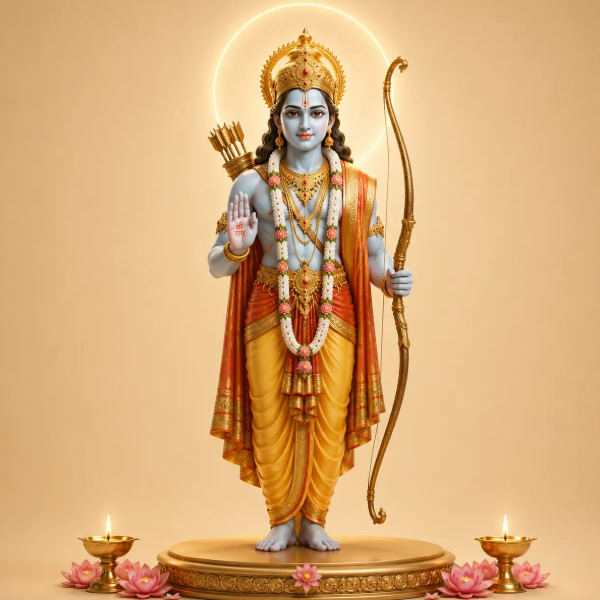
Meaning of Mantra
Knowing that the entire universe is pervaded by Sita-Ram, I offer my humble salutations with folded hands.
Benefits & Science
Benefits of Chanting:
Regular chanting of 'Siyaram May Sab Jag Jani' helps to reprogram the mind to perceive divinity in every aspect of life. This profound shift in perspective naturally fosters universal love, empathy, and compassion, dissolving the barriers of ego and prejudice. It brings about a deep sense of humility and interconnectedness, leading to sustained inner peace, emotional stability, and a profound connection to the cosmic fabric. This practice can significantly reduce mental stress, promote positive neurochemical responses, and enhance overall psychological well-being by anchoring the individual in a state of inclusive consciousness.
Scientific Perspective:
The rhythmic recitation and focused attention inherent in chanting this verse can induce a meditative state, potentially shifting brainwave frequencies towards alpha and theta states, which are associated with relaxation, heightened creativity, and reduced stress. The subtle vibrations produced by vocalization can stimulate the vagus nerve, a key component of the parasympathetic nervous system, promoting a 'rest and digest' response and thereby lowering heart rate, blood pressure, and cortisol levels. Cognitively, the repetitive affirmation of universal oneness can strengthen neural pathways associated with empathy, compassion, and cognitive flexibility, leading to enhanced emotional regulation and a more positive outlook.
Mythology & Origin
Mantra Origin Saga:
This sacred couplet originates from the 'Balakanda' (Childhood Canto) of Goswami Tulsidas's epic poem, the Ramcharitmanas. Composed in the 16th century in the Awadhi dialect of Hindi, this particular verse often serves as a profound devotional salutation, expressing the devotee's realization of the divine omnipresence. It is believed to be a reflection of Lord Shiva's wisdom, shared with Goddess Parvati, on the true nature of Lord Rama's divinity.
Scriptures Mentions:
Ramcharitmanas (Balakanda, specifically after Doha 117-B, often used as a concluding verse or prayer).
Associated Rishi & Deity:
Goswami Tulsidas (composer), Lord Rama, Sita, Lord Shiva, Goddess Parvati (context of discussion).
Historical Significance:
The Ramcharitmanas played a pivotal role in democratizing spiritual knowledge in North India, making the complex philosophical tenets of the Ramayana accessible to the masses through its lucid and devotional verses. This particular couplet became an enduring symbol of the Bhakti movement's emphasis on the immanence of God in all creation, fostering a universal and inclusive spiritual outlook that transcended caste and creed.
Frequently Asked Questions (FAQs)
What is the core message of 'Siyaram May Sab Jag Jani'?
Who composed this couplet and from which scripture does it originate?
Is this mantra only for devotees of Lord Rama?
How can chanting this verse benefit my daily life?
Do I need any special initiation or guru's permission to chant it?
What is the significance of bowing with folded hands ('Jor Jug Pani') in this verse?
Can this mantra be chanted silently, or must it be spoken aloud?
Does this verse encourage a specific religious dogma?
Mantra Sadhana Guidelines
Best Time to Chant
- Mondays are especially auspicious and beneficial.
- Early morning Brahma Muhurta (4:00 - 6:00 AM) is best.
- Highly fruitful during Pradosh Kaal and Mahashivratri.
- Chant before commencing any auspicious task or ritual.
Other Popular Lord Shri Ram Mantras
Other Devotional Categories





Download App
पंचांग तिथि, त्यौहार, व्रत, उत्सव, एकादशी, आरती संग्रह, मंत्र, व्रत कथा